Are Printed Rugs Worth It? When to Use One (and When You'll Regret It)
Printed rugs are cheap, thin, and divisive — designers love to hate them, shoppers love the price. Both are right, and it comes down to where the rug is going. Here's when a printed rug is the smart call, when it'll let you down, and how to buy one that doesn't look it.
Some links below are affiliate links — if you buy through them, finial may earn a small commission, at no extra cost to you. We only point to rugs we'd actually put down.
You found a rug you love at a price that seems too good — then you read the fine print: it's "printed." Or maybe you've just heard printed rugs are tacky and cheap, and you're not sure whether to write them off. Either way, you've hit one of the most divisive things in the rug world. Designers tend to turn their noses up at printed rugs; budget shoppers swear by them. And, like most rug questions, the honest answer isn't "good" or "bad" — it's "it depends on where it's going." Let me make the trade-off clear enough that you can decide for yourself.
What "printed" actually means
A printed rug has its pattern printed onto the surface — the design is essentially photographed or digitally applied onto a thin, flat, low- or no-pile base, usually polyester. The color sits on top of the rug. A woven, tufted, or knotted rug builds the pattern into the rug with actual fibers and pile — the color lives in the rug itself, and you get height, texture, and softness underfoot.
That single difference — pattern-on-top versus pattern-built-in — is the whole story. It's why printed rugs are so much cheaper, why they're so much thinner, and why they don't feel like a "real" rug when you step on them. Everything else about the printed-rug debate flows from that one fact.
Quick note, because these get tangled: printed is about construction (how the pattern got there); washable is about care (can you clean it). They overlap — plenty of cheap washable rugs are printed — but they aren't the same thing. If washability is your actual question, the washable rug guide covers that. This is about the printed construction itself.
The trade-off, honestly
What you gain: Price, mostly — a printed rug is a fraction of the cost of a comparable woven or wool one. You also get thinness, which is genuinely useful in some spots (more on that below), a huge range of patterns and colors cheaply, and a lightweight rug that's easy to move and store.
What you give up: Softness, first and foremost. The single thing most people actually want from a rug — that plush, sink-your-toes-in feel — is exactly what a printed rug doesn't have. There's no pile, so it can feel flat, thin, sometimes a little plasticky underfoot. The pattern, because it's printed on, often looks flat and photographic up close, without the depth a woven pattern gets from color living in the fibers. The print can wear, fade, or rub off with traffic — especially on cheaper ones, which can look tired in a season. Many are synthetic. And a printed rug doesn't age into character the way wool or vintage does; it doesn't develop patina, it just wears.
So here's the trade in one line: you're swapping softness, depth, and longevity for price and thinness. Sometimes that's a brilliant trade. Sometimes it's a mistake. The skill is knowing which room you're in.
When a printed rug is the smart call
Reach for a printed rug in the spots where softness isn't the point and you'd rather not spend:
- Functional, mess-prone rooms — kitchens, entryways, mudrooms, laundry rooms, and under the dining table. In all of these, thin and low-profile is actually what you want (chairs scoot, doors clear, spills wipe up), and nobody's lying on the floor wishing it were plusher.
- Temporary and transitional spaces — a rental, a room you know you'll redo, a placeholder while you save for the real rug, a dorm. No reason to sink money into permanence you don't have.
- A tight budget where the alternative is bare floor. A good printed rug at the right size still grounds a room and pulls the furniture together — and a right-sized printed rug beats an expensive woven one that's too small, every time. (If you're not sure what size that is, start with the size rule — it matters more than the rug.)
In these cases, a printed rug isn't a compromise. It's the correct tool.
The exception: babies, pets, and the living room
Here's where I'll contradict myself a little, because real life earns it. I just told you to put a soft, woven rug in the living room — and I stand by that, except during the years when the floor is a battlefield. When my kids were babies, I had a printed rug in our living room, and I thank god I wasn't trying to clean a thick pile rug through that whole era. Spit-up, mashed banana, a leaky diaper, the dog tracking in mud — all of it wipes off a flat, low-pile printed rug, or goes straight in the wash. On a deep-pile rug, that same mess soaks down into the fibers and the pad and lives there.
This is the one time the printed rug's biggest weakness becomes its biggest strength: no pile means no softness, but it also means there's nowhere for the mess to disappear into. So if you've got babies, toddlers, or pets, a printed or washable rug in the living room isn't settling — it's the smart, sanity-saving call for a season. Put the soulful woven rug down later, when the floor stops being a crime scene. Buy the rug for the life you're actually living right now.
When you'll regret it
Skip the printed rug — and put the money into a woven one — in the spots where the rug is the soft, characterful anchor of the room:
- The hero rug in a living room or bedroom. This is the rug everyone sees and steps on, and it's exactly where no pile and a flat, printed look hurt most. A printed rug here quietly undercuts the whole "finished" feeling you're after — because the rug is the anchor of the room, the first of the four layers, and the anchor isn't where you cut the corner. (More on that in how to make a room feel finished.) The one exception is the messy-years case just above — but once the floor stops being a battlefield, this is where the woven rug belongs.
- Anywhere people actually sit or lie on the floor — a family room with kids, a reading nook. Softness is the entire job there.
- When you want the rug to have soul. Printed simply can't fake the depth and warmth of a woven or, especially, a vintage rug. If you want the piece with character, go woven.
If you do buy printed, buy it well
A printed rug that looks cheap and one that looks great are separated by a few decisions:
- Spend up past the bargain tier. The very cheapest printed rugs are the ones that feel scratchy and shed their print in a season. You don't need the priciest — just skip the bottom.
- Go darker, busier, or faded. A deeper or faded pattern hides the flatness of a print and masks wear. A pale, delicate printed pattern shows its 2-D-ness — and every footprint — the most.
- Put a thick cushioned pad under it. This is the single best move, because it adds back the exact thing a printed rug lacks: softness. Treat the pad as part of the rug, not an extra.
- Favor a little texture. A printed rug with some low pile or weave reads far less flat than the cheapest photo-print-on-a-sheet versions.
- Match it to a functional room, not the hero spot. The right rug in the wrong room is still the wrong rug.
What I'd put down
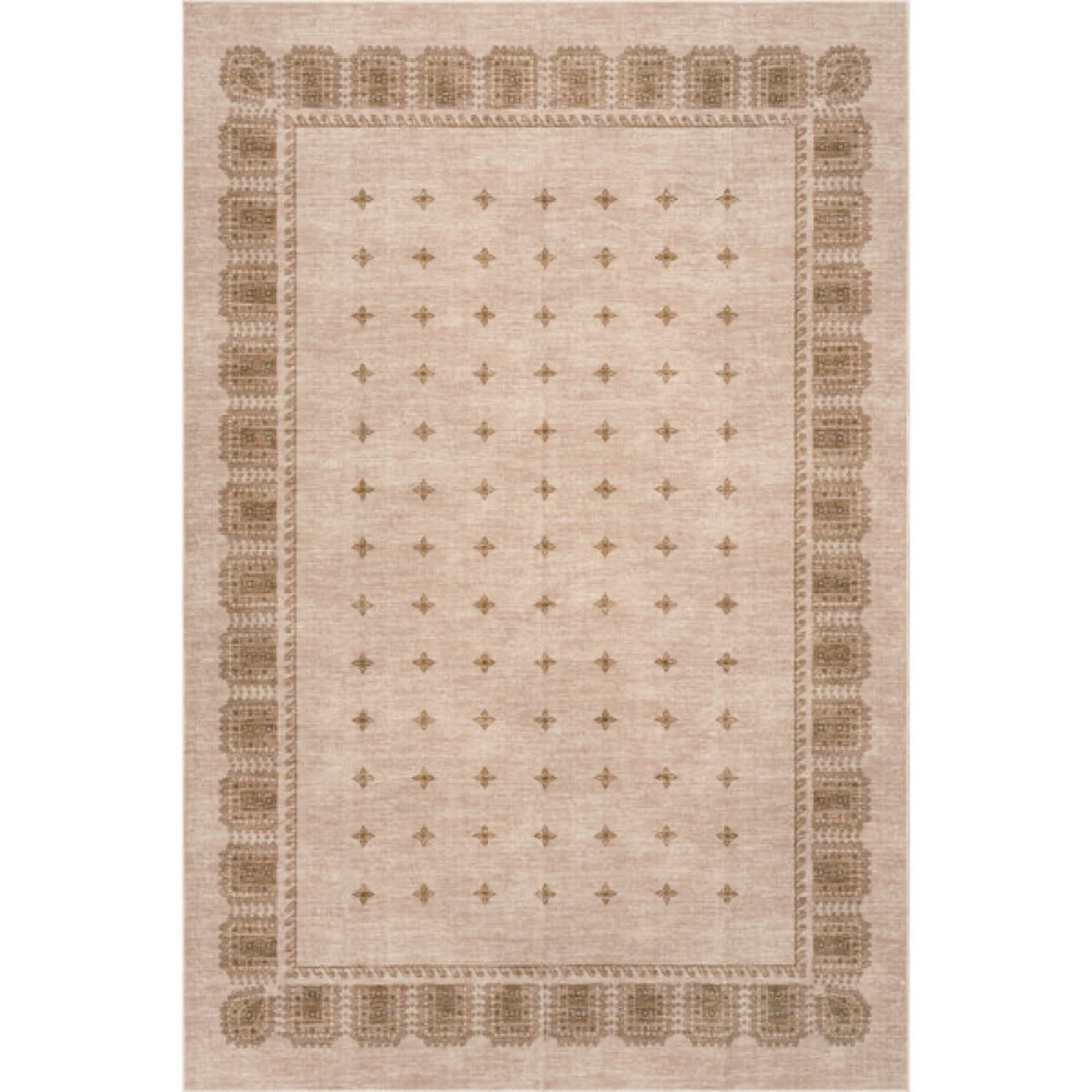
For a functional room — kitchen, entry, under the dining table — a low-pile washable printed in a darker, traditional pattern. Practical, easy to clean, and forgiving of real life.
Shop the RugsUSA Manvie Traditional Washable (Brown) at RugsUSA ↗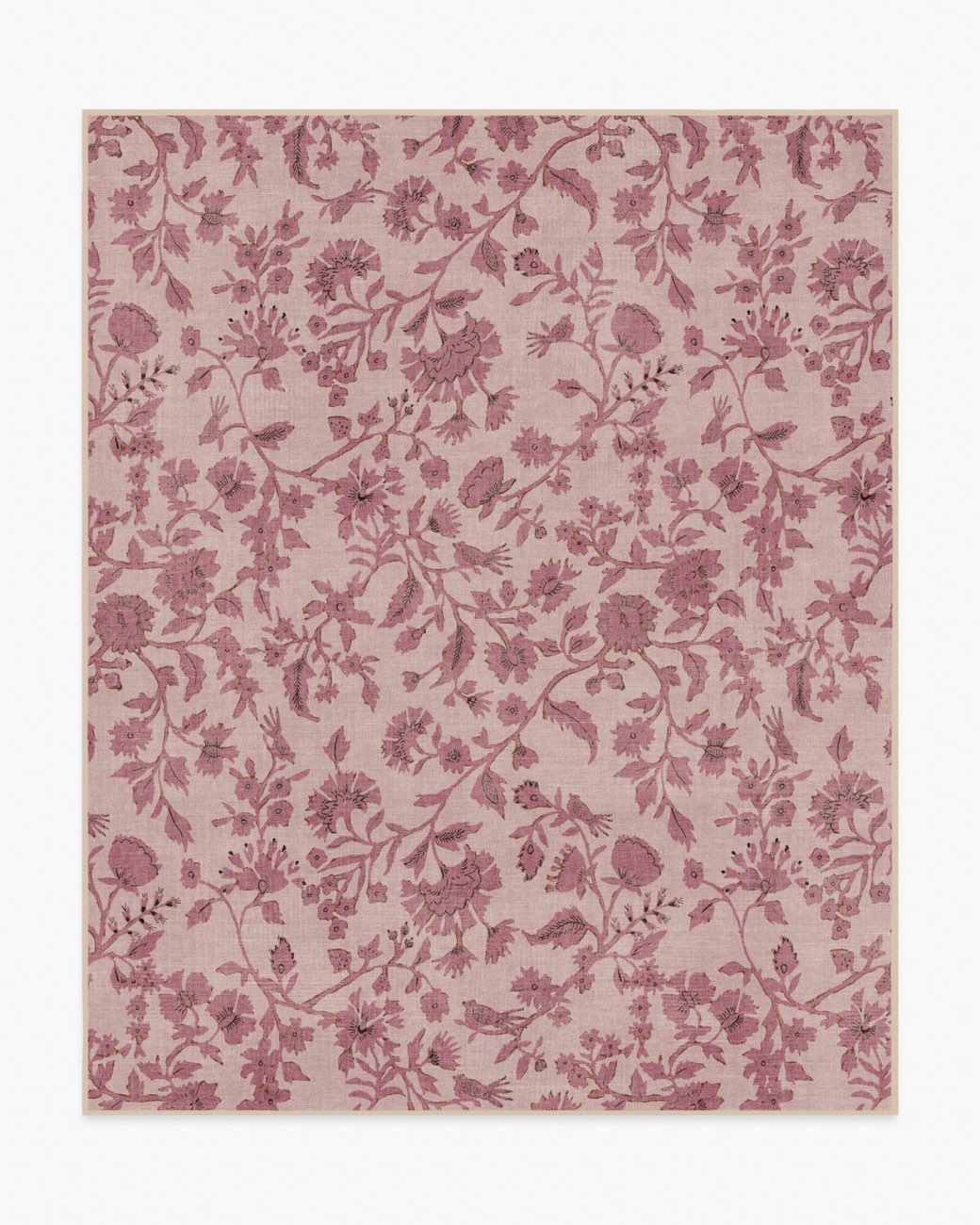
The best version of the category — a washable two-piece system with a grippy non-slip pad and grown-up patterns. Low-profile by design, and the pad solves the softness problem.
Shop the Brenna Natural & Blush at Ruggable ↗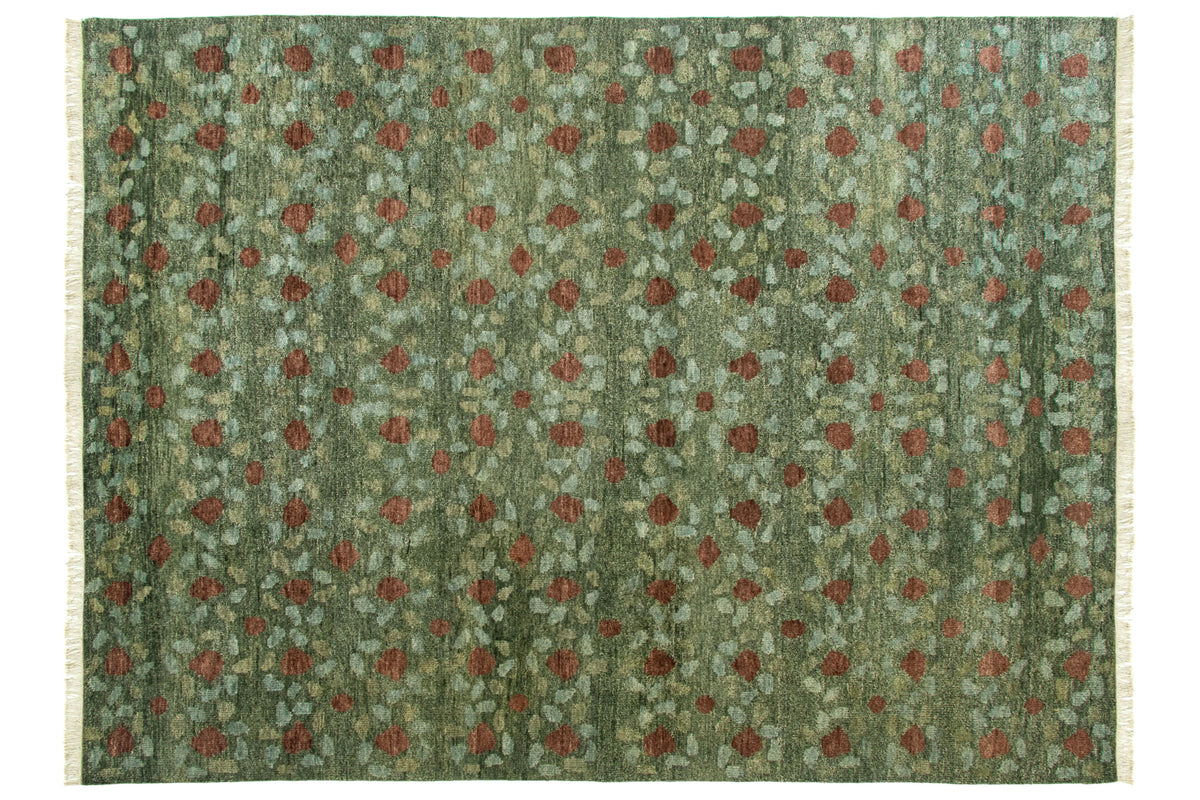
For the hero spot, don't go printed at all — this woven wool gives you the pile, depth, and soul a print can't, and the faded pattern hides everything real life throws at it.
Shop the Milord (Moss) at Revival Rugs ↗- A thick cushioned rug pad — the fix for the no-softness problem, under any printed rug you buy. →
[pick link]
The bottom line
A printed rug is the right answer for the kitchen, the entry, the rental, the placeholder — the functional, messy, low-stakes, or temporary spots where softness isn't the point. It's the wrong answer for the hero rug you want to sink your feet into. The cheap ones look and feel cheap, so spend up, go dark or faded, and put a pad under it. Buy a printed rug for the job, not for the soul.
And whatever you choose, get the size right first — a printed rug at the right size beats an expensive one that's too small — and remember the rug is only the first of the four layers that take a room from furnished to finished. Here's the whole finishing order.
Not sure whether your room is a "printed is fine" spot or a "spend on woven" one? That's exactly the read finial does — tell it the room and what you're keeping, and it'll tell you.