How to Make a Room Feel Finished (When You've Done Everything and It Still Feels Off)
The room is fine. The couch is doing its job. So why does it still feel like it's waiting for someone to actually move in? Here's what's missing — and the order to fix it in.
Some links below are affiliate links — if you buy through them, finial may earn a small commission, at no extra cost to you. We only point to rugs we'd actually put down.
You bought the couch. You found a coffee table that works. The bed's made, the dining chairs match, the lamps are on. By every checklist, you should be done — and the room still feels like a furniture showroom. Pleasant. Correct. Somehow not yours.
If you've spent a weekend rearranging furniture that was already in the right place, or scrolled Pinterest hunting for the one thing you're missing, you are not bad at this. You've just hit the wall everyone hits: the point where the easy 80% is done, and the part that actually makes a room feel finished hasn't started yet.
The internet's answer to this is always the same — add a plant, add a mirror, throw in some pillows. And sure. But a plant is not going to rescue a room that's missing its anchor. The reason your room feels unfinished is more specific than "needs more stuff," and once you can see it, you can't unsee it.
It's not the furniture. It's the finishing layer.
Here's what no one tells you while you're furnishing a room: the furniture is the easy part. A sofa is a solved problem — you pick one that fits and you're done. What separates a room that's furnished from a room that feels finished is everything that goes on top of the furniture. The rug underneath it. The curtains around the windows. The art on the walls. The lamplight, the texture, the few objects that could only be yours.
I call this the finishing layer. It's the last 20% of a room that delivers about 80% of the feeling of "done" — and, not coincidentally, it's the hardest part, which is exactly why most rooms stall right here. Furniture has rules you can look up. The finishing layer is where the rules run out and taste begins, and taste is the thing you can't Google. That's the wall. That's why you're standing in a perfectly nice room feeling like something's wrong.
The good news: it isn't a mystery, and it isn't a grab-bag of random tips. It's four layers, and they go in order. Get them right and almost any room — rental, hand-me-down, builder-beige — reads as intentional. Here's the whole system, from the floor up.
Layer 1: The rug — the anchor
Start on the floor. The rug is the most load-bearing decision in the room and the one people most often get wrong, usually by buying it too small. A rug's real job isn't to be pretty — it's to define a zone and pull the furniture into one intentional group. At the right size, the seating reads as a room. Too small, and every piece floats like its own little island, and the whole space feels smaller and cheaper, no matter how nice the furniture is.
The rule I'd actually follow: big enough that the furniture sits on it. In a living room, the front legs of every seating piece should land on the rug at minimum — ideally the whole arrangement sits on it with margin to spare. The postage-stamp rug marooned in the middle of the floor is the single most common "why does this feel off" culprit there is. Between two sizes? Buy the bigger one. Every time.
→ Go deeper: What size rug for your living room · What color rug goes with your couch
What I'd put down
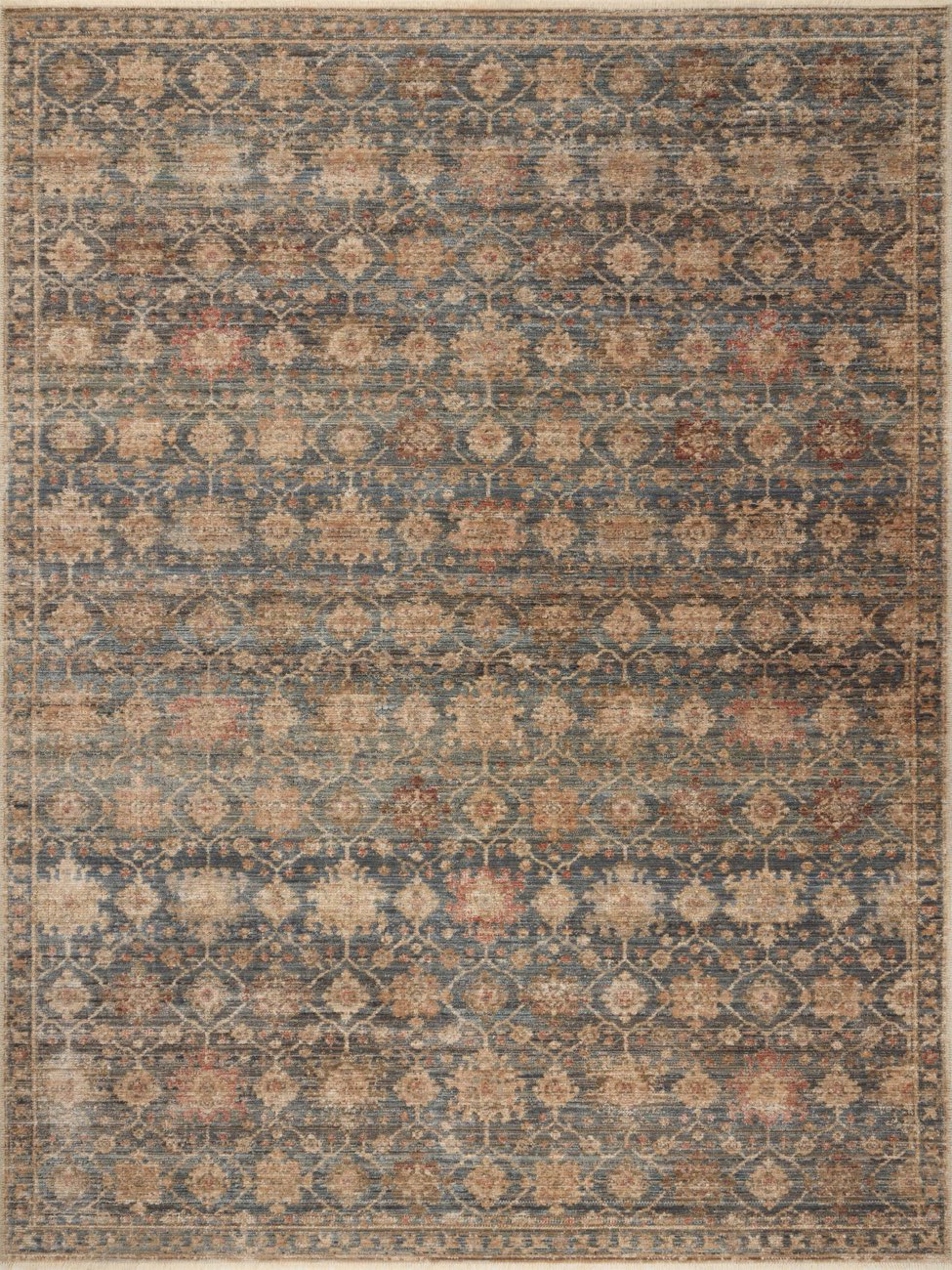
A washed vintage-style Persian in rust and navy — ages beautifully, gives the room soul, and hides a whole toddler era of crumbs.
Shop the Amber Lewis × Loloi Molly at Rugs Direct ↗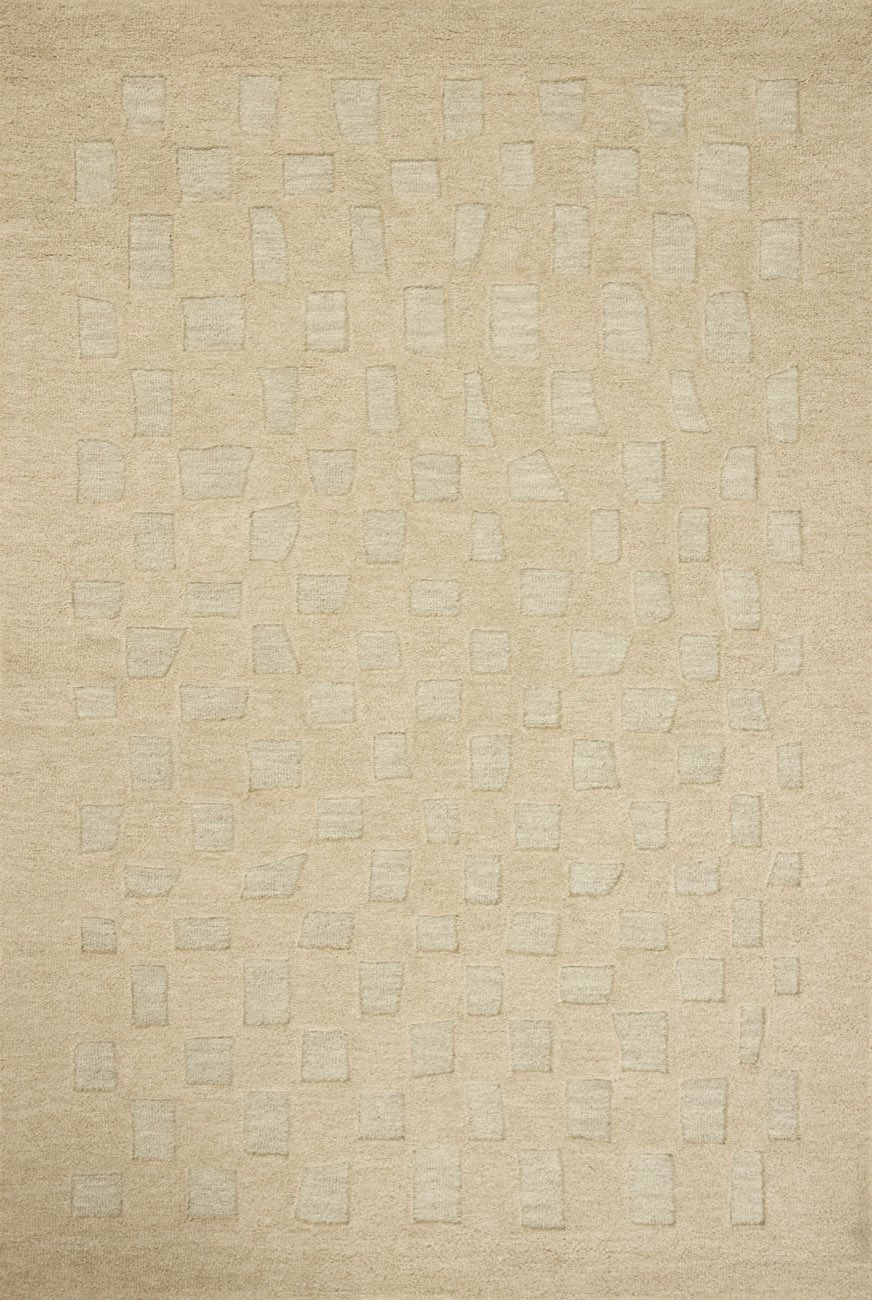
A textured ivory or oatmeal wool, if your room is brighter and more pared-back — just make sure it has real texture, or it'll read flat.
Shop the Leanne Ford × Loloi Craven (Oatmeal/Dove) at Rugs Direct ↗Layer 2: Curtains — the frame
Bare windows are the fastest way to keep a room looking unfinished. They're the interior equivalent of an outfit with no shoes — even a beautiful room with naked glass (or blinds and nothing else) reads as temporary, like you haven't fully unpacked. Curtains soften all the hard architecture, add warmth, and frame the window the way a mat frames a print.
The principle that does the most work: hang them high and wide. Mount the rod close to the ceiling — not just above the window frame — and let the panels run a good 6 to 12 inches past the glass on each side, so the window looks bigger and the ceiling looks taller. Panels should kiss the floor; "high-water" curtains floating six inches up are the dead giveaway. This one move makes a $40 set look custom.
→ Go deeper: How high to hang curtains · What curtain length for your ceiling height
What I'd hang
- Floor-length linen-look panels in a warm neutral — the texture is what keeps them from looking flat or cheap. →
[pick link]
Layer 3: Art — the soul
This is the layer that makes a room stop looking like a catalog and start looking like yours. You can buy every "right" piece of furniture and still land on a space that feels like a nice hotel — pleasant, anonymous. Art is where your actual personality walks in. It's also the layer people are most scared of, so they either skip it or hang something tiny and safe — and both read as unfinished.
Two principles. First, scale: blank walls and tiny art stranded in a sea of wall are giveaways. Whatever goes over the sofa should span roughly two-thirds of the sofa's width — if you think a piece might be too big, it's probably right. Second, height: hang it at eye level, center around 57 to 60 inches from the floor, not floating up near the ceiling where almost everyone hangs it too high. Bigger and lower than your instinct. Nearly always.
→ Go deeper: How big should art be over a sofa · How high to hang art
What I'd hang up
- One oversized print or canvas that you actually love — scale over safety. →
[pick link] - Or a tight gallery grouping mapped on the floor first, covering about two-thirds of the wall. →
[pick link]
Layer 4: Accessories — the warmth
The last layer is the one that makes a room feel lived in instead of staged: texture, light, and a few objects that mean something. This is where most of the generic advice lives — add a plant, light a candle — and it's not wrong. It's just last, and it can't do the job of the three layers beneath it. A flawlessly styled room with a too-small rug and bare windows still feels off. But once the anchor, the frame, and the soul are in place, this is the layer that warms the whole thing up.
The principles: layer textures — a chunky throw against a linen pillow against a velvet one, a woven basket — because contrast is what makes a room feel collected rather than ordered in one click. And get the light down off the ceiling. One overhead fixture is never enough; a finished room has pools of warm light from table and floor lamps, ideally with warm-white bulbs. Keep it personal, too — the matching accessory set from a single store is exactly how you end up back at "looks like a showroom." A few things with a story beat a coordinated set every time.
→ Go deeper: How to style a coffee table · How to layer lighting in a living room
What I'd add
- A generous textured throw and two mismatched pillows — contrast, not a set. →
[pick link] - A warm table or floor lamp, because the overhead light is half the problem. →
[pick link]
You don't need to redo the room. You need to finish it.
Here's what I want you to take from all of this: the room is probably fine. The couch is doing its job. You don't need to start over, return everything, or spend another fortune. You're not missing furniture — you're missing the finishing layer, and now you know exactly what it is and the order it goes in.
Start on the floor with the rug, because it's the anchor everything else hangs off of, and work your way up. That's the whole idea behind finial.design: not redesigning the room you already have, but finishing it — solving the last 20% that's been quietly making the other 80% feel off.
Not sure where yours is stuck? Start with the rug — find your size and your match here. It's the layer that changes the most.