What Color Rug Goes With Your Couch: The Rule Designers Actually Use
Your rug doesn't need to match your couch. It needs to balance it — with the right contrast, undertone, and level of personality.
Some links below are affiliate links — if you buy through them, finial may earn a small commission, at no extra cost to you. We only point to rugs we'd actually put down.
You've got the couch, and you're typing some version of "what color rug goes with a beige couch" into the search bar, hunting for a rug that "goes" — something safe, something that won't clash, won't be a mistake, won't fight what you already own. So you reach for the ivory, or the grey, or the quiet tonal thing, and you end up with a room that's perfectly inoffensive and somehow flat.
Here's the reframe that fixes it: safe is the mistake. Most people choose a rug by asking "does it match the couch?" Designers ask a better question — "what does the room need that the couch isn't giving it?" The rug and the couch don't need to be twins. They need to balance each other. And a rug that just "goes" — that adds no contrast, no texture, no point of view — isn't playing it safe. It's the thing making your room feel unfinished.
The real rule: add what the sofa doesn't
Stop asking whether the rug matches the couch and start asking what the couch is missing. That's the whole game, and every decision below is just a way of answering it.
A cream sofa usually needs depth on the floor. A dark sofa needs lightness or pattern, so the room doesn't sink into one heavy corner. A plain sofa can handle a rug with movement. A bold sofa usually needs something quieter underneath it. In every case, the rug's job is to supply the thing the sofa doesn't have — not to echo what it already does.
This is why exact color matters far less than people think. A rug and a sofa can be completely different colors and still look beautiful together, as long as they share the right undertone, have enough contrast, and know which one is leading the room. The mistake isn't matching. The mistake is choosing a rug that does nothing. Here's how to make it do something.
The first rule: contrast before color
Before you think about hue at all, think in light and dark. The rug and the couch should sit at different values — one lighter, one darker — so they read as two distinct, intentional layers instead of melting into one beige smudge. That value gap is the single most important thing on this list, and it's the lever most people skip.
A cream sofa wants some depth on the floor beneath it. A dark sofa wants a rug with enough light or pattern to keep that corner from turning into a black hole. Get the values different and the pairing already reads as designed, before color even enters the picture. Get them the same and the rug quietly disappears — which is exactly the failure we're trying to avoid.
Match the undertone, not the exact color
The one kind of matching that does matter is temperature. Warm with warm, cool with cool. A warm sofa — camel, tan, cream, brown leather, a warm-grey — wants a rug with warm undertones: rust, gold, terracotta, a honeyed vintage palette. A cool sofa — true grey, blue, a crisp cool white — wants cooler company: slate, ink, cool greys, blues.
Get the temperature aligned and a pairing feels intentional even when the colors are completely different. Get it wrong — a cool, grey-blue rug under a warm camel sofa — and you get that subtle "something's off" you can feel across the room but can't quite name. That feeling is often a temperature mismatch — though sometimes it's value, scale, or the floor tone, which we'll get to.
Decide which piece is the star
In any room, one thing gets to lead and everything else plays backup. So look at your couch and ask which job it's doing.
If your couch is a statement — a bold color, a velvet jewel tone, a big pattern — keep the rug quiet: something subtle, tonal, low-contrast that lets the couch have its moment and grounds it without picking a fight. If your couch is a neutral — grey, beige, cream, a sensible linen — that's your permission slip. The rug gets to be the star: pattern, color, a vintage wash, the piece with actual personality. A neutral couch is begging for a rug that has something to say.
Two statement pieces shouting for the lead is the single most common way a room goes wrong. One leads. The other supports.
Pattern: solid sofa, go bold; busy sofa, go quiet
Pattern is the easy one once you know the trade-off. A solid couch is a blank canvas — put your pattern on the floor. A patterned or heavily textured couch is already doing the talking — give it a rug that's solid, tonal, or barely-there, so the two aren't competing. The exception that rescues everyone: a faded, washed pattern (think vintage Persian) reads almost like a texture from across the room, so it plays nicely even next to a patterned couch.
The neutral-on-neutral vanishing act
This is the failure mode the "play it safe" instinct walks you straight into. Beige couch, ivory rug, greige walls: technically nothing is "wrong," and the room is somehow boring and unfinished at the same time. The fix isn't more color — it's more contrast: a deeper or more textured rug, or a faded pattern that adds quiet variation. Tone-on-tone can absolutely be beautiful, but only when the tones are genuinely different and real texture is carrying it. Same value plus no texture equals a room that reads flat, every time.
Your rug is also talking to your floor
Here's the catch that explains why a rug can look perfect with your sofa online and still fall flat in your actual room: the rug isn't only relating to the couch. It's relating to the floor underneath it, too.
A light oak floor, an ivory rug, and a cream sofa can dissolve into one pale blur — technically it all "goes," but nothing reads. Dark wood, a dark rug, and a dark sofa can sink the whole seating area into one heavy corner. Warm, orange-toned wood floors can make a cool grey rug look harsher and more out of place than it did on screen. And pale floors usually need more depth or pattern from the rug to keep the space from washing out.
So when you're judging contrast, don't just hold the rug up against the sofa — look at the whole stack: floor, rug, sofa, walls. The rug has to hold its own in that mix, not just match one piece of it.
The cheat code: when in doubt, a washed vintage-style Persian
If you read this far and you just want the answer: a faded, vintage-style Persian goes with almost any couch, and it's not luck. That aged, multi-tonal palette already contains a little of everything — a rust, a soft blue, a cream, a charcoal — so whatever your couch is, the rug has a thread that quietly picks it up. It brings contrast and pattern without committing to one loud color, it's warm without being noisy, and — the practical miracle — the busy wash hides crumbs, paws, and a whole era of real life. It's the most forgiving rug you can buy, which is exactly why I reach for it constantly.
The quick couch-by-couch guide
- Grey couch — the most flexible base there is. Cool grey leans into blues, ink, and cool neutrals; warm "greige" loves rust, gold, and warm vintage washes. Add pattern — an all-grey-everything room is the flattest room.
- Beige, tan, or cream couch — warm and forgiving. Go warmer and deeper on the floor (rust, terracotta, a warm vintage Persian), and steer clear of an ivory rug that just melts into it.
- Brown or cognac leather couch — wants warmth and a little soul. Vintage reds, rusts, warm patterns; a cool grey rug will fight the leather.
- Navy or dark statement couch — let it lead. A lighter, low-contrast rug (warm neutral, faded pattern) so the corner doesn't fall into a void — and skip a second bold color on the floor.
- White couch — high contrast is your friend. The rug is where the warmth and personality come in: texture, pattern, a vintage wash, so the room doesn't read clinical.
- Velvet or jewel-tone couch (emerald, rust, blush) — already the star. Put something quiet, tonal, and textured underneath, and resist matching the jewel tone exactly. Relate to it; don't echo it.
What I'd put down
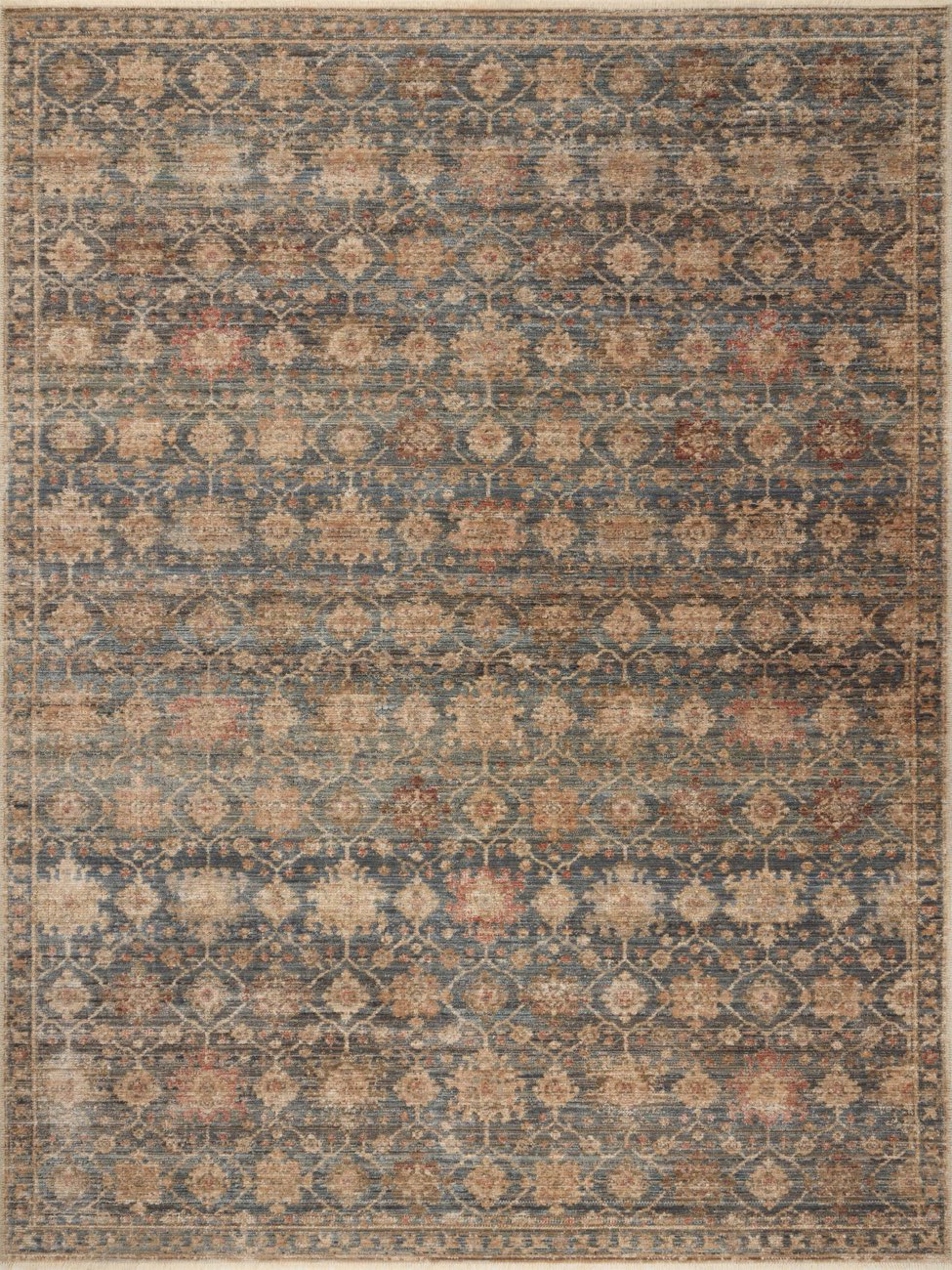
Best for beige, cream, grey, camel, and brown-leather sofas that need warmth and personality. The washed, multi-tonal palette relates to almost any couch and does the contrast-and-pattern job in a single move — the most forgiving rug you can buy.
Shop the Amber Lewis × Loloi Molly (Ocean/Sunset) at Rugs Direct ↗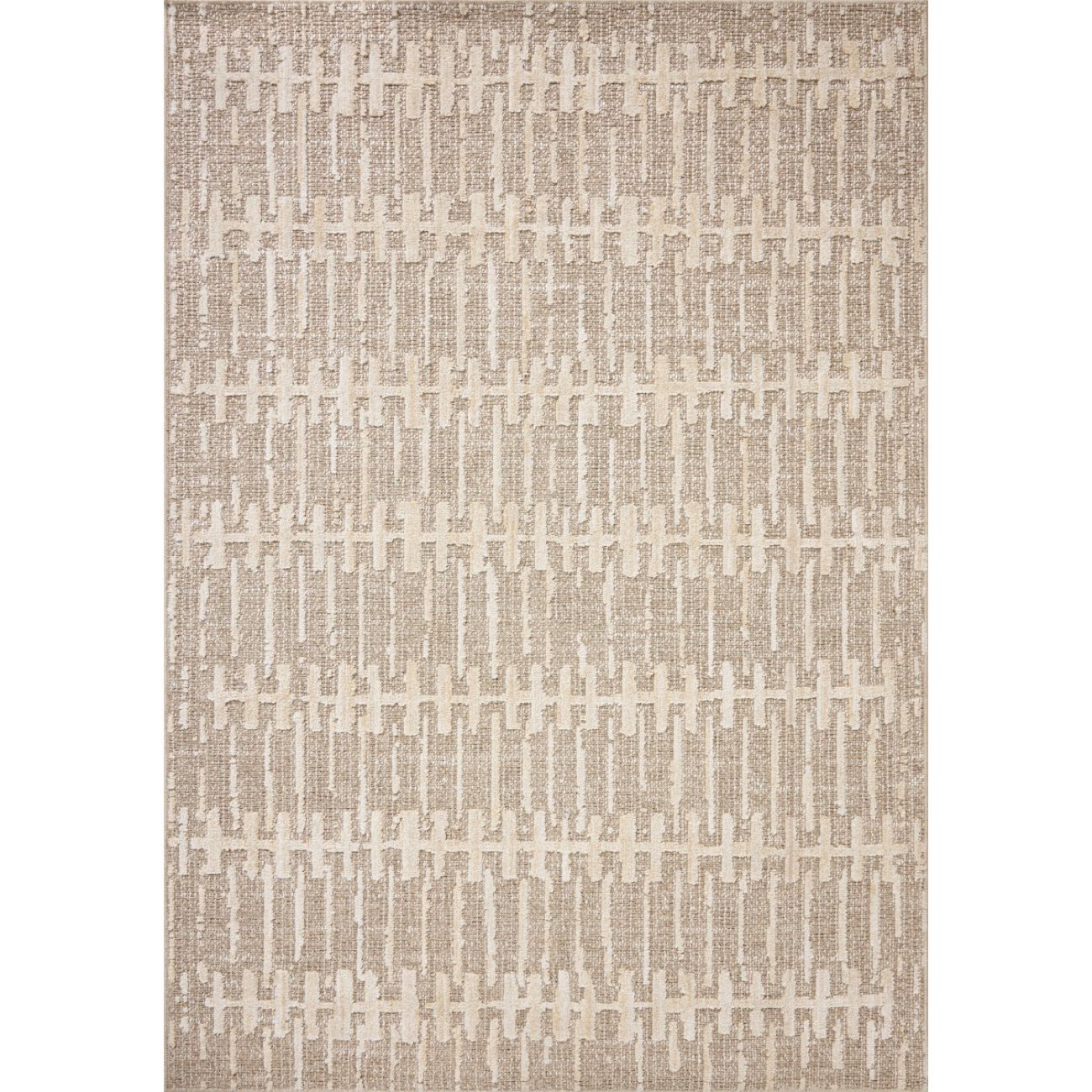
Best for bold, patterned, or jewel-tone sofas that are already the star and need something quiet underneath. A textured tonal rug a few shades off your sofa, with enough real texture that it never reads flat.
Shop the Amber Lewis × Loloi Bexley (Taupe/Natural) at Rugs Direct ↗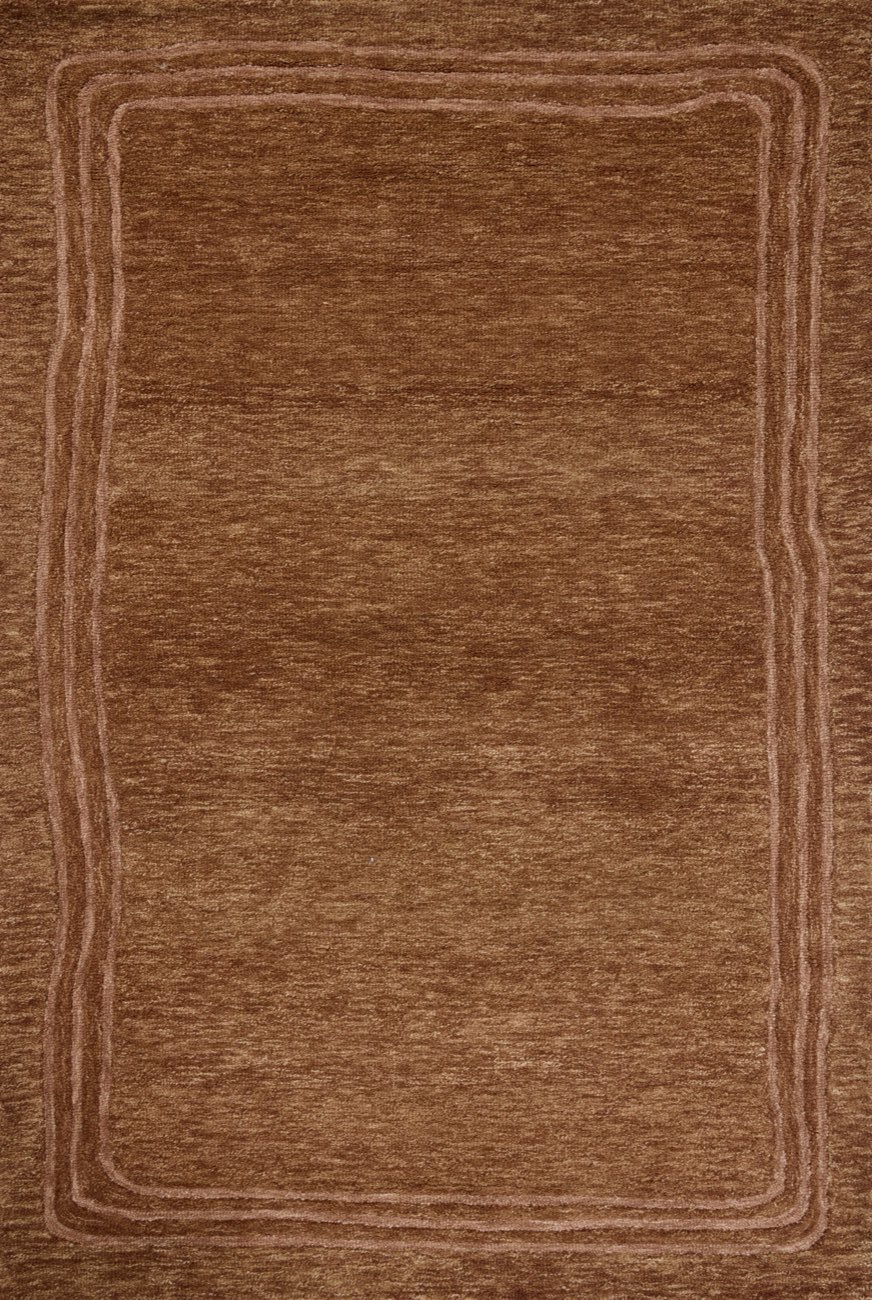
Best for navy and dark statement sofas. A warm, low-contrast wool that lifts the corner and adds warmth without throwing a second loud color into the room.
Shop the Leanne Ford × Loloi Craven (Spice/Rose) at Rugs Direct ↗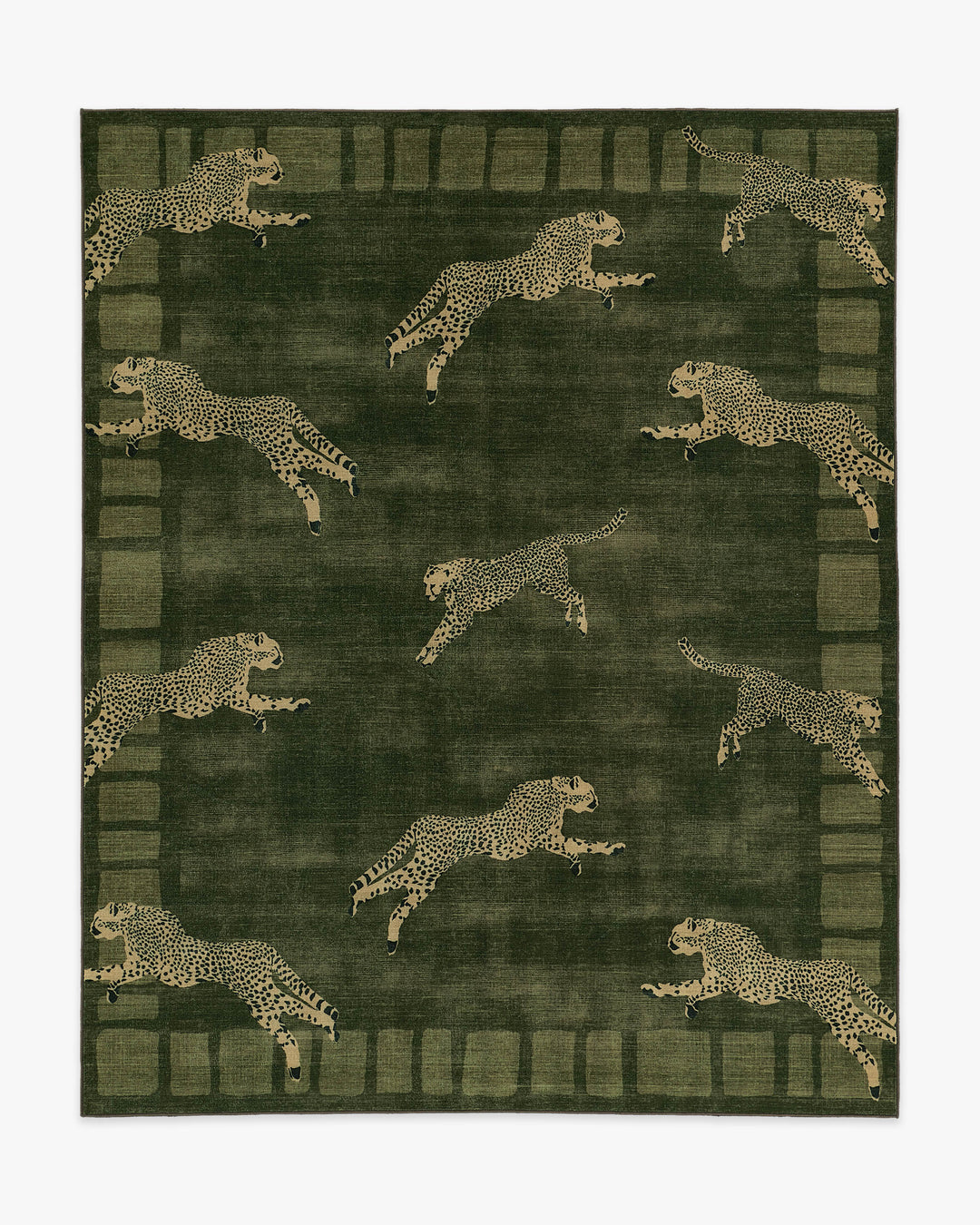
Best for any sofa in a home with kids or pets. A washable olive cheetah print that brings real pattern and personality while it hides crumbs, paws, and a whole era of real life, then goes straight in the wash.
Shop the Scalamandré × Ruggable Leaping Cheetah (Olive Green) at Ruggable ↗The bottom line
Your rug doesn't have to match your couch. It has to balance the room — with contrast, undertone, texture, and a clear job. Stop asking "does it go?" and start asking "what's missing?" Get the value different, the temperature aligned, and the right piece leading, and the rug and couch will look like they were chosen for each other — because, in the way that counts, they were.
Color is the second decision, though. Get the size right first — a perfectly balanced rug that's too small still sinks the room — and remember the rug is only the first of the four layers that take a space from furnished to finished.
Not sure whether your couch leans warm or cool, loud or quiet — or how it's playing against your floor? That's exactly the read finial does — tell it what you're keeping, and it'll balance the rug to the whole room.