What Size Rug for Your Living Room (the One Rule That Fixes 90% of It)
Most living room rugs are too small — and it's the fastest way to make a nice room feel cheap. Here's exactly what size to buy, by room and by layout, from someone who's tired of seeing the bath-mat-under-the-sofa look.
Some links below are affiliate links — if you buy through them, finial may earn a small commission, at no extra cost to you. We only point to rugs we'd actually put down.
You're forty tabs deep, a rug you like is sitting in your cart, and you cannot for the life of you tell whether it's the right size. 5×8? 8×10? 9×12? They all sound the same and they all cost real money, and the nightmare scenario is it shows up, it's too small, and now you're wrestling an unrolled rug back into a tube to return it. I get it. Let me make this simple.
Here's the truth most rug guides bury: the size matters more than the rug. A gorgeous rug in the wrong size will make your room feel off. A plain rug in the right size will make it feel finished. So before you fall down a pattern-and-color rabbit hole, get the size right — it's the part that actually does the work.
The one rule: the furniture goes ON the rug
If you remember nothing else, remember this. Your rug should be big enough that your furniture sits on it — not next to it. At an absolute minimum, the front legs of your sofa and your chairs should land on the rug. Better still, the whole seating group sits on it with a little floor showing around the edges.
Here's why this matters so much: a rug's real job isn't to be pretty, it's to draw a boundary around your seating and turn a few separate pieces into one intentional group — a room within the room. When the furniture sits on the rug, your eye reads it all as connected and deliberate. When the rug is too small and floats in the middle with the furniture stranded off it, every piece looks marooned, the conversation area falls apart, and — this is the cruel part — the whole room looks smaller. A too-small rug shrinks a space. A properly sized one expands it.
The mistake everyone makes: going too small
Nine out of ten living rooms I walk into have a rug that's at least one size too small. It's the most common decorating mistake there is, and it's almost always a budget flinch — the 5×8 is cheaper than the 9×12, so people talk themselves into it. Don't. A too-small rug is the single fastest way to make a beautiful, expensive room read as cheap. It looks like a bath mat that wandered in from the bathroom and got lost.
There's an old designer line worth tattooing somewhere: no rug is better than a small rug. If your only options are a too-small rug or bare floor, choose bare floor and save up. But really — just buy the bigger one. When you're torn between two sizes, size up. Every single time. I have never once heard someone say their rug was too big. I hear "I wish I'd gone bigger" constantly.
So what size do I actually buy?
Here's the practical version for a standard living room — a sofa and a couple of chairs:
8×10 — the small-to-medium standard. Right for apartments and smaller living rooms. Gets the front legs of your sofa and chairs on it, coffee table comfortably in the middle. This is about the smallest I'd go in a real living room.
9×12 — the "when in doubt" size. This is the workhorse for the average living room, and the one most people actually need. It's big enough to get all or most of your furniture sitting on it, which is exactly the look you're after. If you measured nothing and just bought a 9×12, you'd be right more often than not.
10×14 and up — large and open rooms. For big living rooms and great rooms, where you want everything on the rug with a generous margin of floor around the edges. Don't be scared of these — big rooms swallow small rugs alive.
A 5×8, for the record, is almost never enough on its own in a living room. It works as an accent in a tiny space, or layered on top of something larger — but solo under a full seating group, it's the floating-island look. Skip it.
The measuring shortcut: measure your seating area (the footprint of your sofa and chairs where they actually sit), then pick the rug that reaches a few inches past the sides of the sofa and lets the front legs land on it. Leave roughly 10 to 18 inches of bare floor between the rug and the walls — you want a border of floor framing the rug, not wall-to-wall coverage, which just reads as carpet. And when the math lands between two sizes: size up. (Yes. Again.)
The cases the other guides skip
This is where most rug advice gives up — and it's exactly where people get stuck:
You have a sectional. Size up more than you think. A sectional is a big piece of furniture, and a rug that only tucks under its front edge looks like a postage stamp pinned under a couch. Go 9×12 at a minimum, often larger, and make sure the rug extends well past the open end of the sectional so the whole thing sits in one defined zone. The inner front legs should be on the rug.
It's an open-plan living/dining room. Use the rug to define the living zone. In a big open space, the rug is the thing that tells your eye "the living room is here" — so size it to hold the full seating group and let it draw that line clearly. (Your dining table gets its own rug, sized so the chairs stay on it even when pulled out — but that's a different post.)
It's a small living room or apartment. You can drop to a 6×9, or even a 5×8, but the rule doesn't budge: get at least the front legs of your seating on it. The instinct in a small room is to go tiny so you "don't overwhelm the space." It's backwards — a too-small rug makes a small room look smaller and more cluttered. A rug that reaches under the furniture makes it feel intentional and, somehow, bigger.
Your couch is against the wall. Common in smaller rooms. You've got two decent options: pull the rug under the front legs of the sofa (ideal), or let it start just in front of the sofa and anchor the coffee table and chairs — as long as it doesn't shrink to a lonely raft in the dead center of the floor. Floating in the middle is the only real wrong answer here.
What I'd actually put down
Once the size is sorted, here's where I'd start — and notice the size is doing most of the work; these are just the rugs I reach for:
What I'd put down
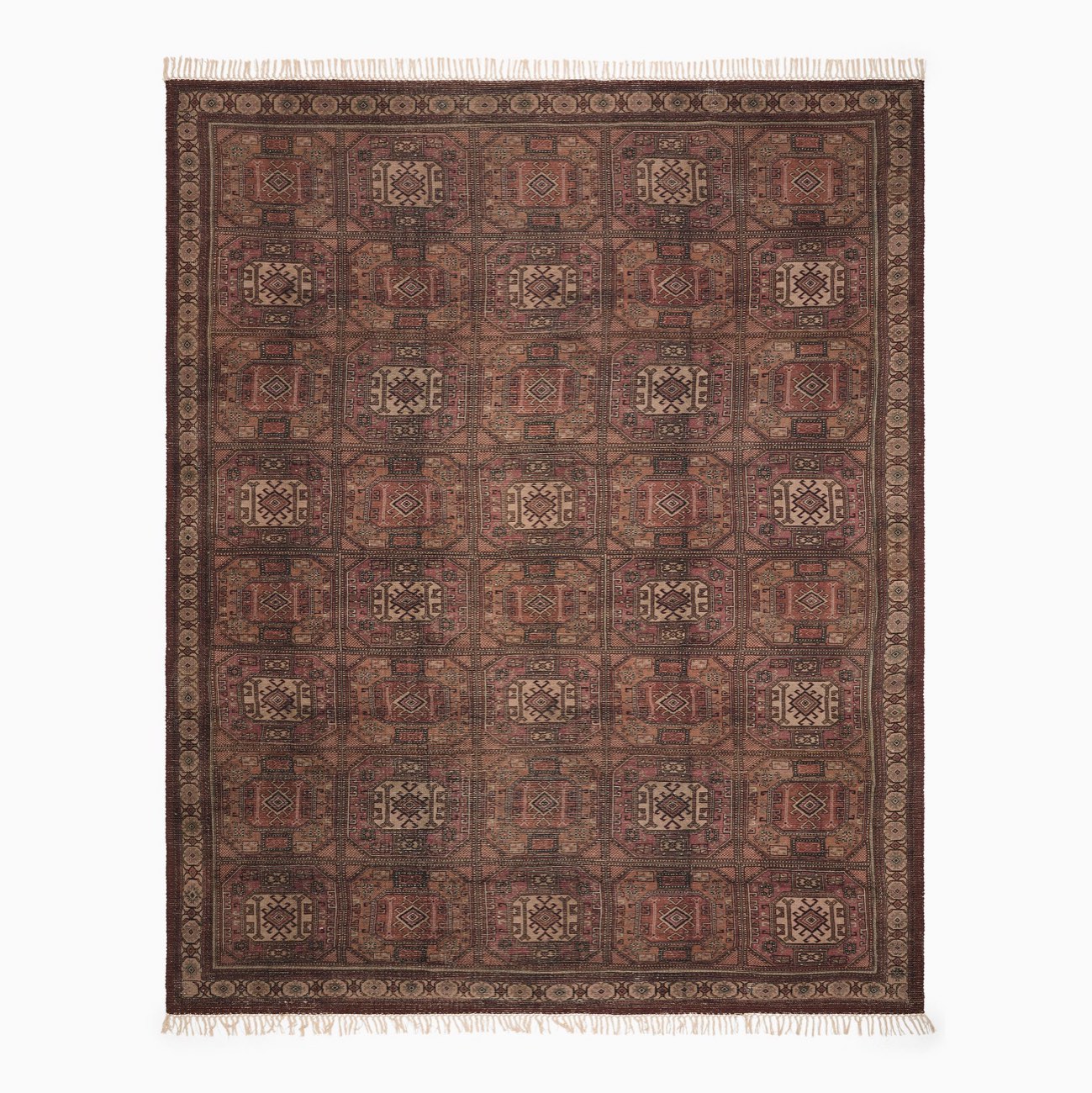
A washed vintage-style Persian, here in a 9×12 — the faded pattern hides everything, the aged palette warms the whole room, and it's about the most forgiving thing you can buy.
Shop the West Elm Astrid Reversible (Persian) at West Elm ↗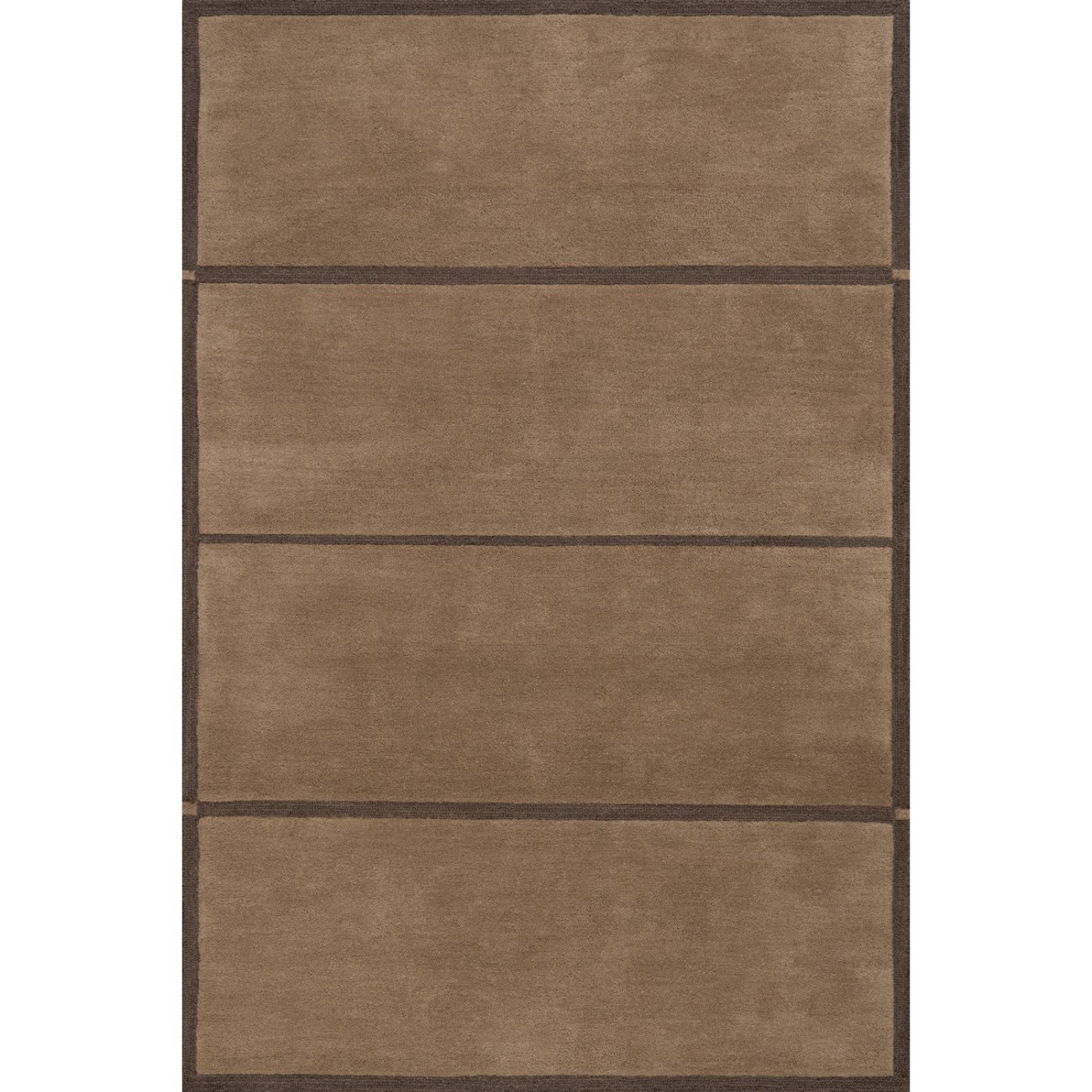
A textured neutral wool in 8×10 or 9×12 if you want quiet — the mid-century weave gives it the real texture a flat neutral lacks.
Shop the Mira Mid-Century Geometric Rug (Tan) at RugsUSA ↗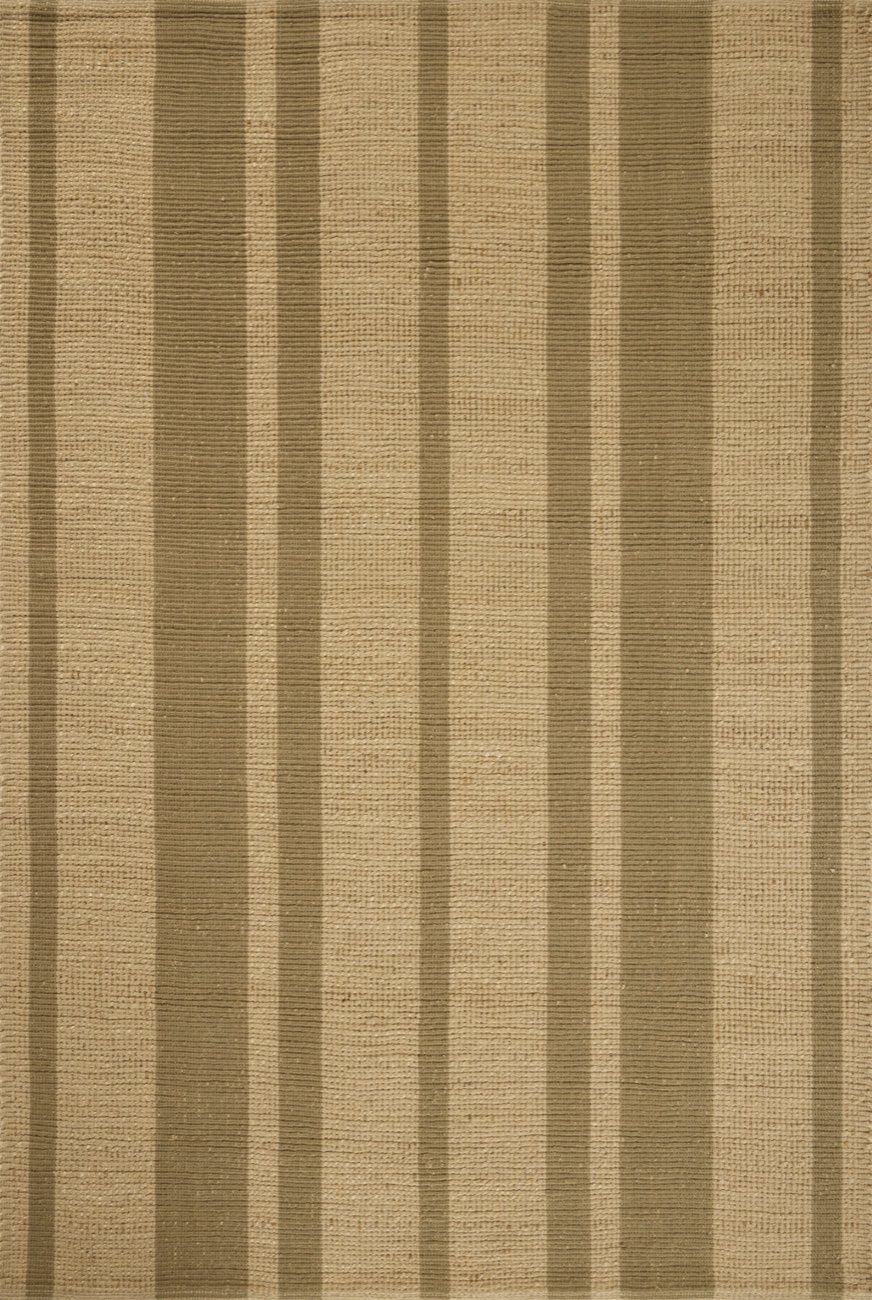
A flatweave or jute, if you're layering or working in an open plan and want something that grounds the space without competing.
Shop the Leanne Ford × Loloi Weatherstaff (Natural/Olive) at Rugs Direct ↗The bottom line
Get the size right and you've done the hard part. Furniture on the rug, a border of floor around the edges, and when you're torn between two sizes, the bigger one is the right one. The rug is the anchor of the entire room — it's the first of the four layers that take a space from furnished to finished.
Sizing sorted? The next question is which rug — what color and style actually goes with your couch. And if you want the full picture of how the rug fits with everything else, here's how to make a room feel finished, from the floor up.